
Grosvenor Orthopaedic Partners: custom WordPress development and a clearer patient booking pathway
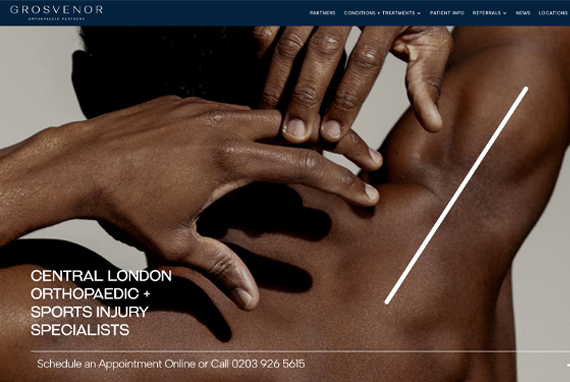
Phast Media has worked closely with Grosvenor Orthopaedic Partners to deliver and continually improve a specialist orthopaedic website, from the initial WordPress build based on supplied Figma designs through to custom-coded booking and referral improvements.
A specialist orthopaedic website built to keep improving
Grosvenor Orthopaedic Partners is a specialist orthopaedic group website serving patients, GPs, referrers and professional users looking for consultant-led orthopaedic care.
Phast Media’s role has evolved across the project. The initial website was designed by an external design team, with Phast taking the supplied Figma designs and creating the website in WordPress. Since then, the focus has moved into ongoing development, performance, patient pathway improvements and new ideas for the site.
The main benefit has been a clearer, faster and more useful route from patient need to the right enquiry pathway.
Rather than treating launch as the end of the project, GOP has become a good example of how a healthcare website can be refined over time. The site continues to evolve as new requirements, patient needs and operational opportunities emerge.
Explore the live GOP work
These links show the live website and key pathway pages discussed in this case study, including the booking form, referrals and consultant partner structure.
Turning supplied Figma designs into a working WordPress website
The first phase of the project was delivery. Phast was supplied with Figma designs from an external design team and was responsible for translating those designs into a working WordPress website.
This kind of project requires more than simply recreating static layouts. The finished website has to work responsively, be manageable in WordPress, support real content, handle consultant profiles, present services clearly and remain stable as the site grows.
Supplied designs were converted into a working website structure in WordPress.
Key sections were developed to match the approved design while supporting real site content.
The site needed to support consultant profiles, orthopaedic services and patient information.
Layouts needed to work across desktop, tablet and mobile for patients and professional users.
The result was a WordPress website that respected the design direction while giving GOP a practical digital platform to build on.
Streamlining the route from enquiry to the right consultant
One of the most important later improvements was the booking and enquiry journey. For a multi-consultant orthopaedic group, a generic enquiry route can create friction. Patients may know their problem area, but not which consultant is most appropriate.
Phast redesigned the enquiry flow around a clearer patient pathway. Instead of asking users to work everything out before making contact, the system helps guide them through a logical journey.
| Old challenge | Improved approach | Patient benefit |
|---|---|---|
| Users were faced with a less focused booking or enquiry route. | Create a guided pathway that starts with the area of concern. | Patients can begin with what they know, such as knee, hip, spine, shoulder or foot and ankle. |
| Choosing a consultant could feel difficult for users who were unsure. | Show relevant consultants based on the selected area. | Patients see more relevant options without needing to understand the full consultant structure first. |
| General enquiries could become less directed. | Include a route for users who are not sure who to choose. | The GOP team can still direct the enquiry to the right place. |
| The previous route added unnecessary bloat and friction. | Replace it with a leaner, custom-coded system. | The pathway is easier to use and lighter for the website. |
The purpose was not just to make the form look better. It was to make the booking route more useful for patients and more practical for the team receiving enquiries.
A smarter enquiry form built around real patient choices
The custom enquiry system was designed around a simple three-step journey: choose the area of concern, choose a relevant consultant, then send the enquiry.
This structure helps reduce uncertainty. Patients can start with the part of the body or treatment area they are worried about, then see relevant consultant options with profile links, expertise summaries and contact routing behind the form.
The patient selects the area they need help with first, rather than starting with a long form.
The site shows consultants connected to that area, making the choice more focused.
The enquiry form follows once the user has made a more informed selection.
A general enquiry route lets the GOP team guide patients to the most appropriate consultant.
Behind the scenes, the work involved custom front-end logic, consultant data, Contact Form 7 integration and practical routing considerations so enquiries could be handled more effectively.
The key improvement was turning a static enquiry form into a guided patient decision pathway.
You can view the live pathway on the GOP enquiry form, where the booking route is designed to help users move from initial concern to a more relevant consultant enquiry.
Improving GP, AHP, patient and tertiary referral journeys
The site has also been improved with revised referral sections. These are important because GOP does not only need to support patients who self-refer. The website also needs to speak clearly to GPs, allied healthcare professionals, consultants and other referrers.
The revised referral content, including dedicated private GP referral information, separates different user types so each group receives more relevant guidance. This makes the page easier to use and helps professional users understand how to refer, what information is useful and how the GOP team can support the patient pathway.
| Referral audience | What the section supports | Why it matters |
|---|---|---|
| GPs | Referral guidance, appointment routes and practical information for patient referrals. | Helps GPs understand how to refer patients into specialist orthopaedic care. |
| Allied healthcare professionals | Guidance for AHPs where consultant opinion, imaging or specialist treatment may be needed. | Supports clearer referral decisions from physiotherapists and other professionals. |
| Patients | Self-referral guidance and routes for patients who are unsure how to proceed. | Gives patients a clearer way to contact the team directly. |
| Tertiary referrals | Support for second opinions, complex cases and consultant-to-consultant referrals. | Reflects the specialist nature of GOP’s consultant team. |
The live referrals page is a good example of how ongoing website work can create new value after launch. The site becomes more useful because it reflects the different ways people actually arrive, refer and enquire.
A leaner booking route also helped performance
The booking pathway improvements were not only about usability. They also helped remove unnecessary bloat from the old enquiry route.
Healthcare websites often accumulate layers of scripts, widgets, forms and third-party tools over time. When the user journey is simplified and rebuilt more cleanly, the website can feel quicker, clearer and less cluttered.
Better UX and better performance often come from the same decision: remove friction and build only what the user actually needs.
In GOP’s case, the custom-coded booking pathway allowed the patient journey to be improved while also reducing reliance on a heavier old booking or enquiry route.
For healthcare clients, this matters because users are often accessing the site on mobile, comparing consultants, checking appointment options or trying to make contact quickly.
The site continues to evolve with new ideas and improvements
GOP is not a static project. Phast continues to work on the site, creating new sections, improving existing pathways and developing ideas that make the website more useful for patients, referrers and the practice team.
The newly revised private GP referral and wider referral sections are part of that ongoing approach. Rather than simply maintaining the site, Phast looks for opportunities to make the website clearer, faster and more aligned with how users actually need to use it.
| Ongoing work area | What Phast supports | Why it helps GOP |
|---|---|---|
| New content sections | Planning and building useful pages and sections for patients and referrers. | Keeps the website relevant and more useful over time. |
| Patient pathway improvements | Refining how people move from concern to consultant to enquiry. | Supports better conversion and clearer user journeys. |
| Custom-coded features | Building tailored tools where standard website elements are not enough. | Allows the site to reflect GOP’s specific operational needs. |
| Performance and technical care | Reducing bloat, improving speed and keeping the site stable. | Supports user experience and long-term site health. |
| Search and structure | Improving content organisation, internal links and SEO foundations. | Helps the site become more visible and easier to understand. |
This is where long-term website support becomes genuinely useful. A healthcare website should not just stay online. It should keep getting better.
For more on this approach, read our guide to why website support matters after launch.
Healthcare website case study FAQs
Did Phast Media design the original GOP website visuals?
The original website visuals were supplied by an external design team in Figma. Phast Media’s role was to take those designs and create the working WordPress website, then continue improving the site through custom development, pathway work and ongoing support.
What was the main improvement Phast made after launch?
A key improvement was the redesign of the booking and enquiry pathway, including a custom consultant selector that helps users choose an area, view relevant consultants and send a more focused enquiry.
Why does a consultant selector help patients?
Patients may know they have a hip, knee, spine, shoulder or foot and ankle problem, but not know which consultant to choose. A consultant selector helps narrow the options and gives patients a clearer route to making an enquiry.
How did the booking pathway affect performance?
The new pathway helped replace a heavier old booking or enquiry route with a leaner custom-coded approach. This improved the user journey and helped reduce unnecessary website bloat.
Can Phast Media support ongoing healthcare website development?
Yes. Phast Media supports healthcare websites with custom WordPress development, patient pathway improvements, referral sections, performance work, SEO structure, content updates and ongoing digital support.
Does your healthcare website need a clearer patient pathway?
Phast Media can help with custom WordPress development, patient booking journeys, consultant selector systems, referral pages, performance improvements, SEO structure and ongoing healthcare website support.